Old House Borer
Pro Required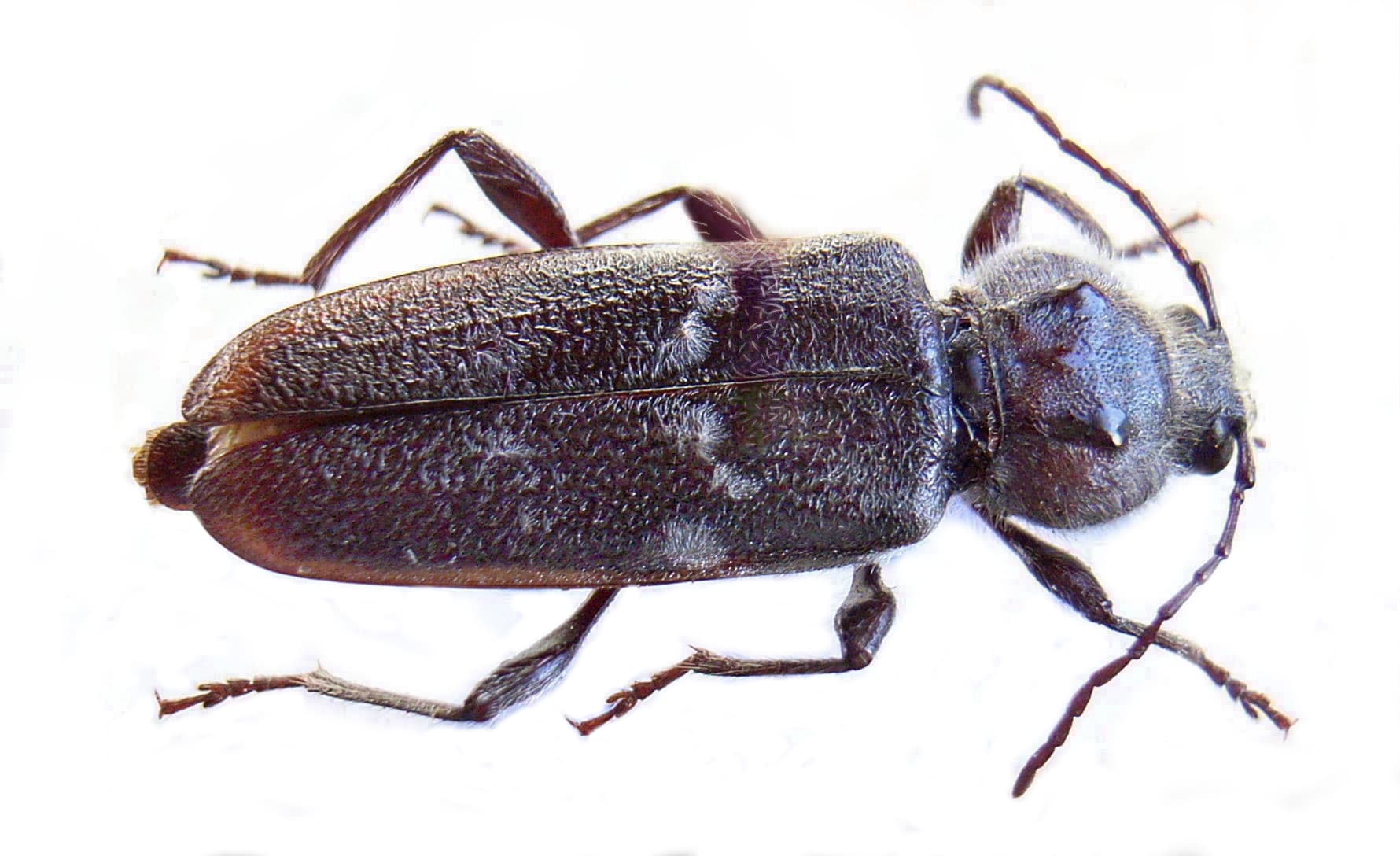
Identification
A long-horned wood-boring beetle whose larvae tunnel extensively through structural softwood, sometimes producing an audible chewing sound within walls.
Can I DIY this?
Pro RequiredThis is not a DIY job.
Because of the safety risk, property damage, or specialized equipment involved, this pest should be handled by a licensed professional. We'd rather tell you that straight than sell you a product that won't fix it.
Find a trusted pest proRecommended products
Nibor-D Insecticide Foam with IGR (RTU)Borate treatment for exposed/infested woodSome links may be affiliate links. Buggsy may earn a commission at no extra cost to you. Always follow the product label.
- Check whether the infestation is active or old — fresh, light-colored powdery frass means active larvae; dry, clumpy frass or emergence holes usually mean it's already over.
- For active infestations in sound wood, apply a borate-based wood treatment to all exposed sides — sealed or painted wood needs the finish removed first.
- Treat nearby cracks, voids, and entry points with a residual insecticide.
- If the wood is structurally compromised, it may be more practical to replace it than treat it — get a professional opinion if you're unsure.
- Watch for new exit holes or fresh frass over the following season to confirm the treatment worked.
Wear long pants, a long-sleeved shirt, closed-toe shoes with socks, chemical-resistant gloves, and goggles. Add a respirator if the label calls for it or ventilation is poor.