Carpenter Ant
Pro Recommended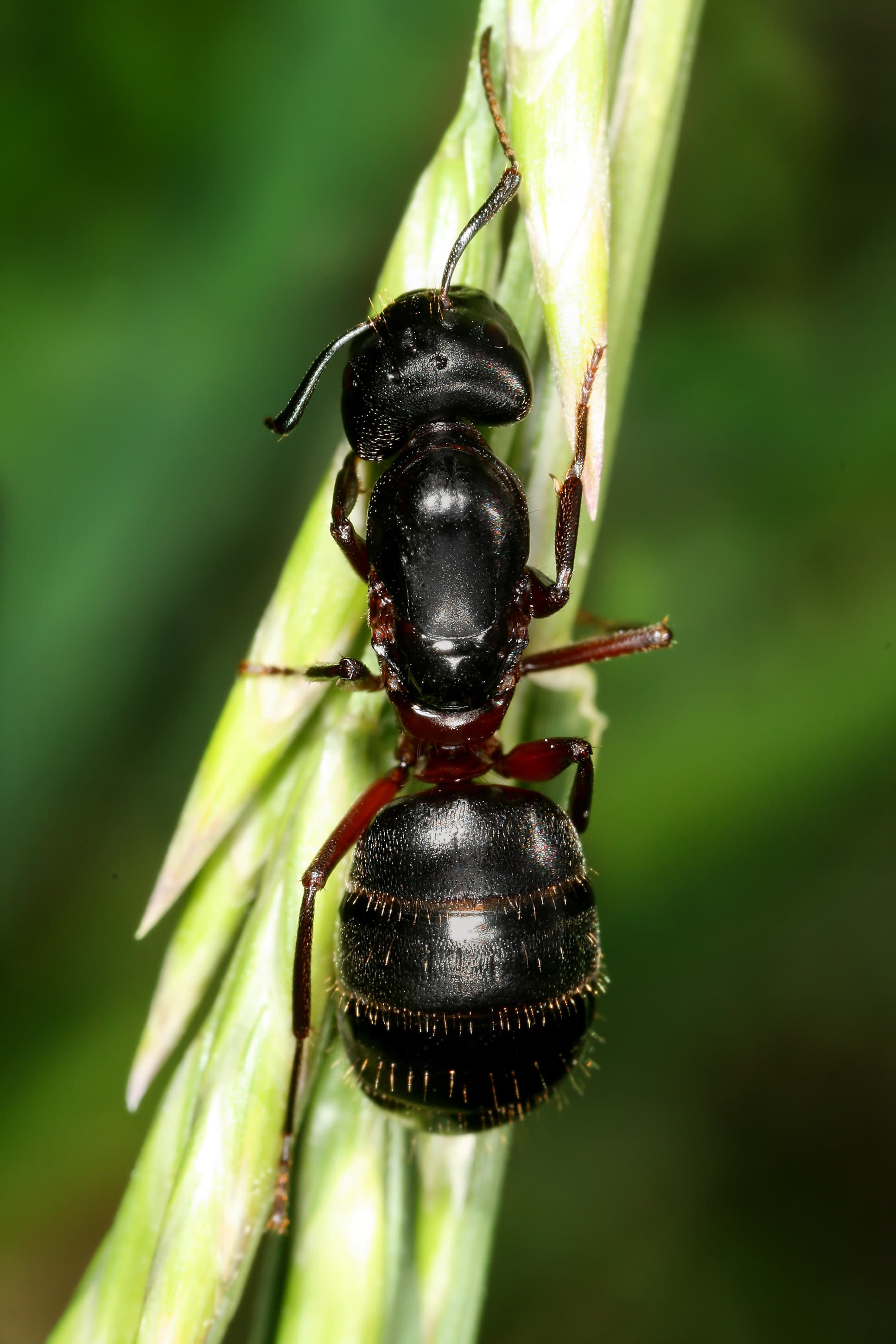
Identification
Large black or red-and-black ants, 1/4 to 1/2 inch long, that excavate smooth tunnels in damp or decaying wood to build nests. Unlike termites, they don't eat wood — they push out small piles of sawdust-like debris (frass) near entry points. Winged reproductives ('swarmers') emerging indoors in spring are a strong sign of an established nest.
Can I DIY this?
Pro RecommendedHonest advice: most people should call a pro.
This pest is notoriously hard to eliminate with store-bought treatments alone, and failed attempts usually make the problem worse. DIY can knock down light activity, but for anything established we recommend a professional.
Find a trusted pest proRecommended products
Taurus SC Termiticide/Insecticide, 20 ozNon-repellent perimeter treatmentControl Solutions D-Fense Dust Insecticide, 1lbDust cracks, crevices & voidsSome links may be affiliate links. Buggsy may earn a commission at no extra cost to you. Always follow the product label.
- Confirm carpenter ants (not termites) — look for smooth, clean tunnels and small piles of sawdust-like debris (frass) pushed out near the nest, since carpenter ants excavate wood but don't eat it.
- Find and fix the moisture problem — a leak, poor grading, or damaged siding is almost always what let them get started in the first place. Without fixing this, the ants will likely come back.
- Locate the nest if possible (follow foraging trails, listen for faint rustling in walls) and treat the void directly with an insecticide dust for the most reliable knockdown.
- Apply a non-repellent liquid or aerosol along baseboards, entry points, and foraging trails so it gets carried back to any satellite nests.
- Set out protein and sugar bait near trails to catch foragers you haven't traced back yet.
- Treat the exterior perimeter, especially around woodpiles, stumps, and any wood-to-soil contact near the structure.
- Recheck in a few weeks — if frass or activity continues, the nest wasn't fully treated or the moisture issue hasn't been resolved.
Wear long pants, a long-sleeved shirt, closed-toe shoes with socks, chemical-resistant gloves, and goggles. Add a respirator if the label calls for it or ventilation is poor.