American Cockroach
Possible DIY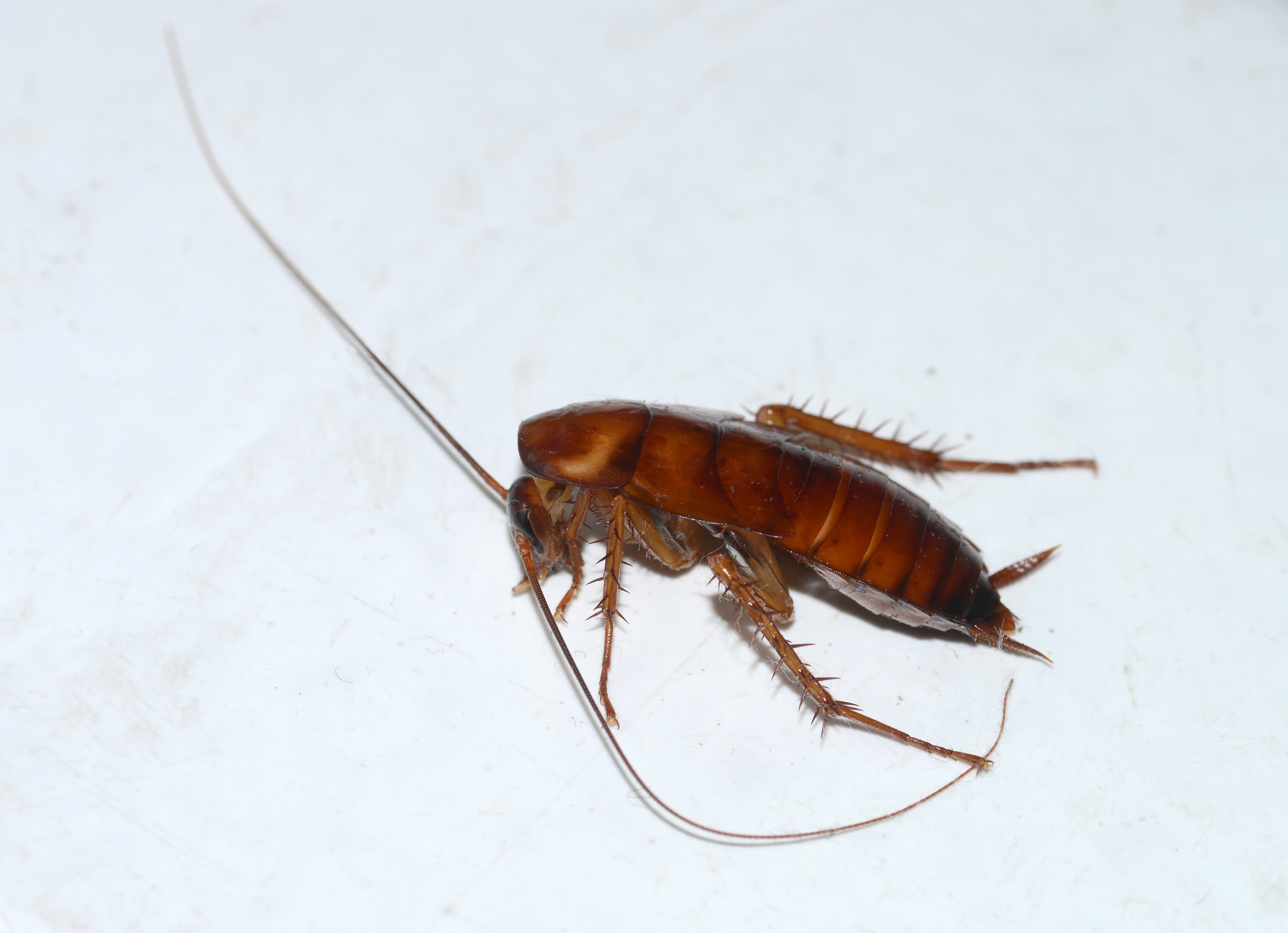
Identification
The largest common house cockroach, reddish-brown with a pale figure-8 marking behind the head, often found in basements, sewers, and around plumbing.
Can I DIY this?
Possible DIYDIY is doable — with the right approach.
Minor cases respond well to DIY treatment, but this pest can get away from you. Follow the guide closely, and if you're still seeing activity after a full treatment cycle, it's time to bring in a pro.
Recommended products
Nisus Niban Granular Bait, 10 lbsGranular bait — basement, crawl space & exteriorSyngenta Demand CS Insecticide, 8ozOutside perimeter sprayNibor-D Insecticide Foam with IGR (RTU)Foam drains & moist harborageSome links may be affiliate links. Buggsy may earn a commission at no extra cost to you. Always follow the product label.
- Identify the species and find where they're hiding — behind appliances, under sinks, and in wall voids near water.
- Deep clean the kitchen and bathroom, store food in sealed containers, and fix any leaks — roaches won't stay somewhere with nothing to eat or drink.
- Seal cracks and gaps with caulk to cut off harborage and force roaches into the open.
- Place gel bait in corners, under appliances, and along baseboards — don't spray insecticide near the bait, or you'll repel roaches from it before it works.
- Add an insect growth regulator (IGR) to stop nymphs from maturing and reproducing.
- Use glue boards to track how much activity remains.
- Reapply bait every 2-3 weeks. Full elimination can take anywhere from three weeks to a few months depending on how established the infestation is.
Wear long pants, a long-sleeved shirt, closed-toe shoes with socks, chemical-resistant gloves, and goggles. Add a respirator if the label calls for it or ventilation is poor.